
Millions of hours stuck in traffic
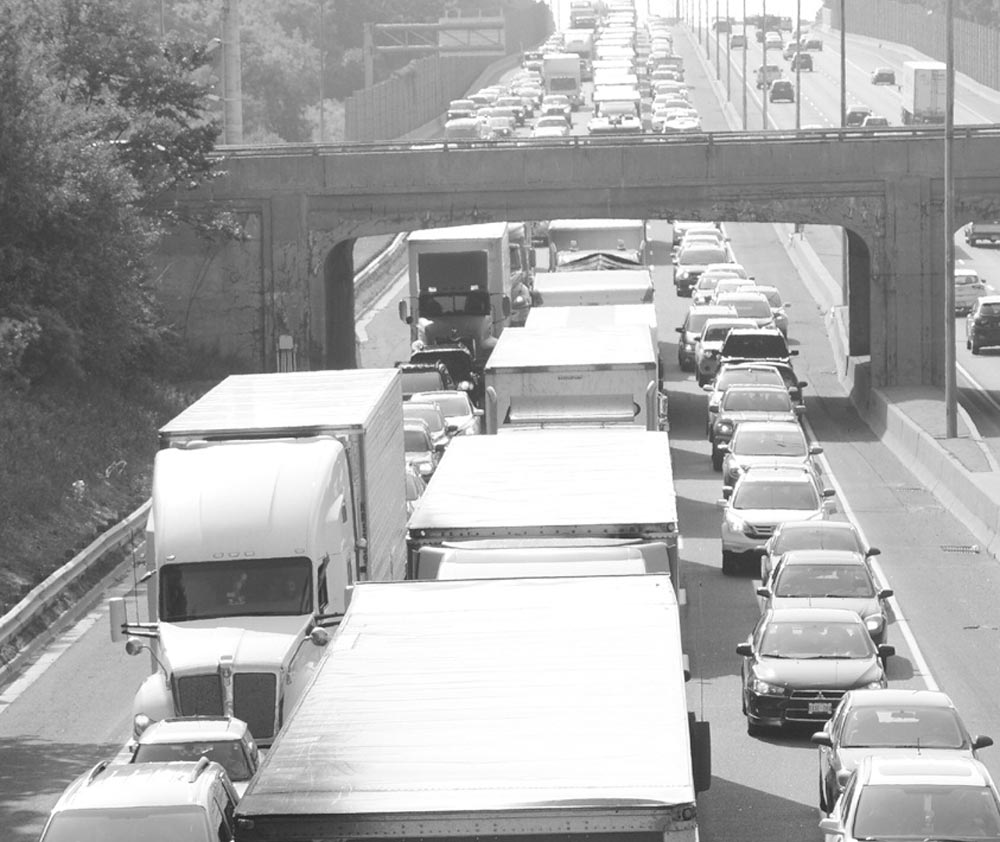
A new report from the Canadian Chamber of Commerce estimates Oshawa residents spend 2.3 million hours annually sitting in traffic.
By Joel Wittnebel/The Oshawa Express
Prepare yourselves Oshawa, this may be tough to hear.
As a whole, we spend over 2 million hours a year simply sitting in traffic, and along with the frustration that comes with being stuck in Highway 401 gridlock, it’s also costing our economy serious cash.
The latest report from the Canadian Chamber of Commerce states that every year, drivers in Toronto, Montreal and Vancouver spend a combined 10,000 years sitting on congested roads. The economic fallout rises into the billions. A 2006 Metrolinx report pegged the cost of congestion at $6 billion with the fear that those numbers could increase to $15 billion by 2030 if no solution was found.
However, in 2015, the CD Howe Institute estimated that those costs were actually understated, and that the economic impact of all those goods and people sitting in traffic was actually anywhere between $1.5 billion and $5 billion higher than originally thought.
In Oshawa, that number comes down to 2.3 million hours of additional travel time. In the city’s transportation master plan, it pegged the annual cost of the traffic back-up at around $50 million. However, that number could increase by 150 per cent by 2031 if nothing is done.
For that reason, Mayor John Henry says the Canadian Chamber of Commerce report is only the latest opportunity to raise the issue with the provincial government.
“We are concerned, and have been and raise it at every opportunity,” Mayor Henry says. “Our big challenge for us is we’re at the end of the funnel.”
That funnel being drivers heading east into Toronto from Lindsay, Port Hope, Cobourg and Peterborough will all converge on the Highway 401 in Oshawa to get there. Then the reverse happens with drivers coming into the city from the western regions of Durham.
“The government needs to understand that if we’re going to have the quality of life that we expect, the time with our families and the ability to get back and forth to work, having transportation that works makes sense,” Henry says.
The Chamber report calls for “highly focused infrastructure investments” as well as requiring municipalities to better manage funding for the assets they have.
“Through its infrastructure programs the federal government should require better asset management practices, including full lifecycle cost accounting for municipal transportation projects,” the report states. “Improved and consistent municipal capacity will help communities improve infrastructure investment decisions and ensure new projects are maintained as long-term investments.”
The sentiment is echoed by Perrin Beatty, the CEO and president of the Canadian Chamber of Commerce.
“Inconsistent public investment in our transportation systems is a hindrance to small and large businesses alike with real environmental and economic costs,” he says.
For Mayor Henry, those investments must come in the form of transit dollars, and this summer, he’s been meeting with Metrolinx and the Municipality of Clarington on moving ahead with the Lakeshore East GO line into Bowmanville.
“The challenge that we have, for the longest time, we neglected transit, and as our residents in any municipality, not just Oshawa, continue to grow and expand, they need to get through and down to the bottom part of Toronto it’s really important,” Henry says.
However, as Oshawa continues to grow, there could be creative solutions on the horizon, especially as more turn to reverse commuting by living in the city and driving out to work in Oshawa.
“If we can continue to develop our economy and do the great things that staff and council and businesses have done to get Oshawa recognized…and continue to expand on that, maybe we can lessen that commute,” Henry says.